Anatomy & Physiology
Neuromuscular Junction Transmission
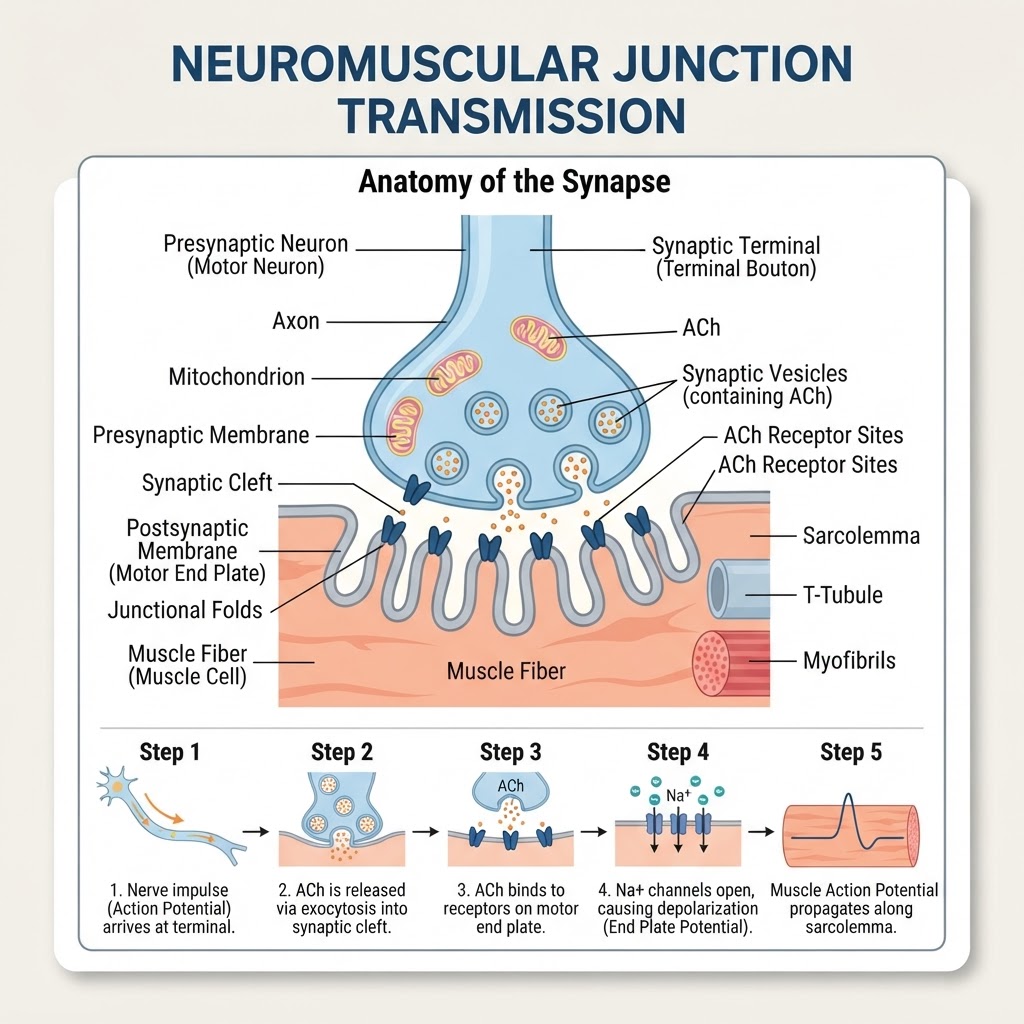
The neuromuscular junction (NMJ) is the chemical synapse between a motor neuron and a muscle fiber, essential for initiating voluntary muscle contraction.
Signal Transduction
- Action potential reaches the presynaptic terminal, triggering voltage-gated Ca2+ channels to open.
- Acetylcholine (ACh) vesicles fuse with the membrane and release neurotransmitter into the synaptic cleft.
- ACh binds to nicotinic receptors on the motor end plate, opening ligand-gated cation channels.
- End-plate potential triggers muscle action potential, leading to sarcoplasmic reticulum Ca2+ release.
Clinical Correlations
- Myasthenia Gravis: Autoimmune destruction of ACh receptors leads to muscle weakness.
- Succinylcholine: Depolarizing neuromuscular blocker that mimics ACh at the receptor site.
- Acetylcholinesterase inhibitors (e.g., neostigmine) increase the availability of ACh at the synapse.
Like what you see?
Subscribe to unlock all 360 Study Cards and 15,000+ flashcards, track your progress, and study anywhere.