Anatomy & Physiology
The Hepatic Portal System
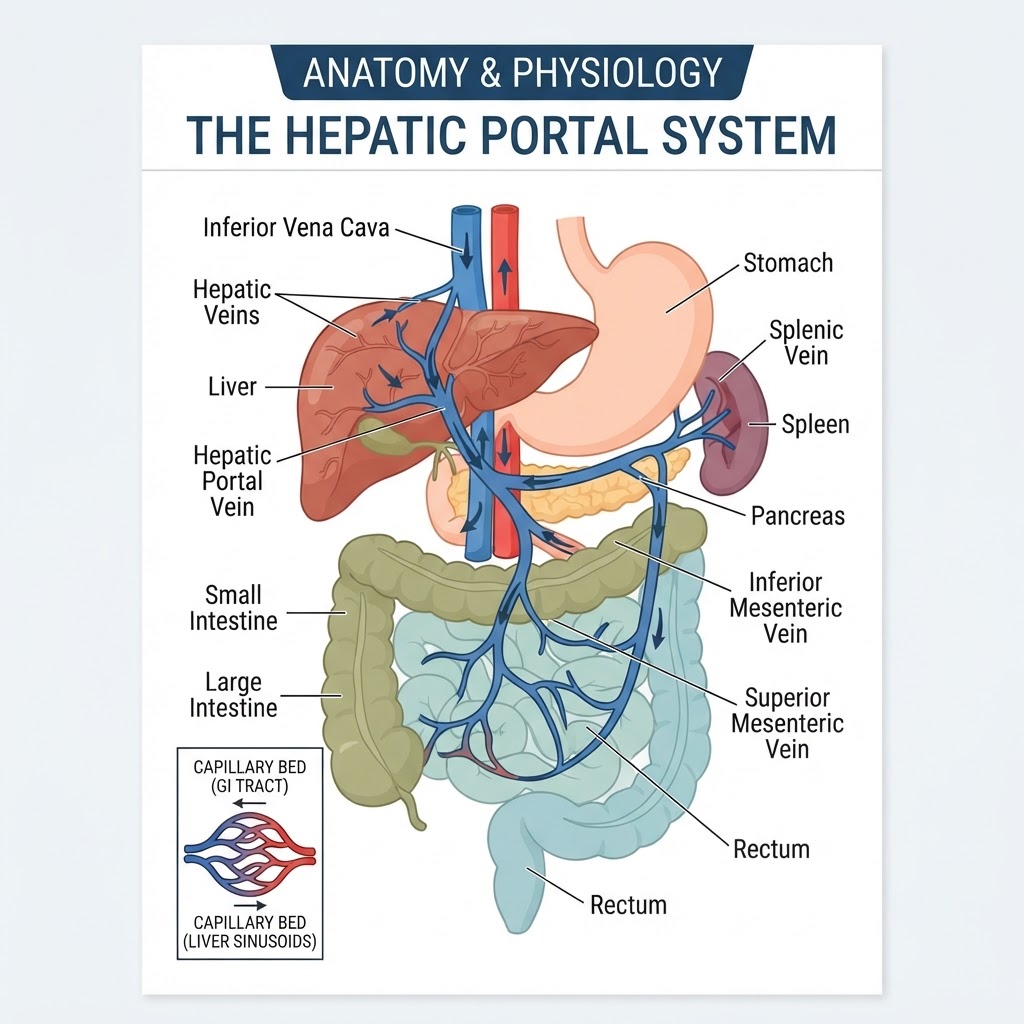
The hepatic portal system is a specialized venous network that shunts nutrient-rich, toxin-containing blood from the GI tract directly to the liver for processing.
Anatomical Components
- Composed of the superior mesenteric, inferior mesenteric, and splenic veins joining to form the hepatic portal vein.
- Liver performs detoxification, metabolism of nutrients, and storage of glycogen before blood enters systemic circulation.
- Blood exits the liver via hepatic veins into the inferior vena cava.
Clinical Pathophysiology
- Portal hypertension leads to esophageal varices and splenomegaly.
- Hepatic encephalopathy occurs when ammonia bypasses the liver due to portosystemic shunting.
- Assess patients with cirrhosis for jaundice, ascites, and altered mental status as indicators of hepatic dysfunction.
Like what you see?
Subscribe to unlock all 360 Study Cards and 15,000+ flashcards, track your progress, and study anywhere.