Anatomy & Physiology
Cardiac Output Regulation
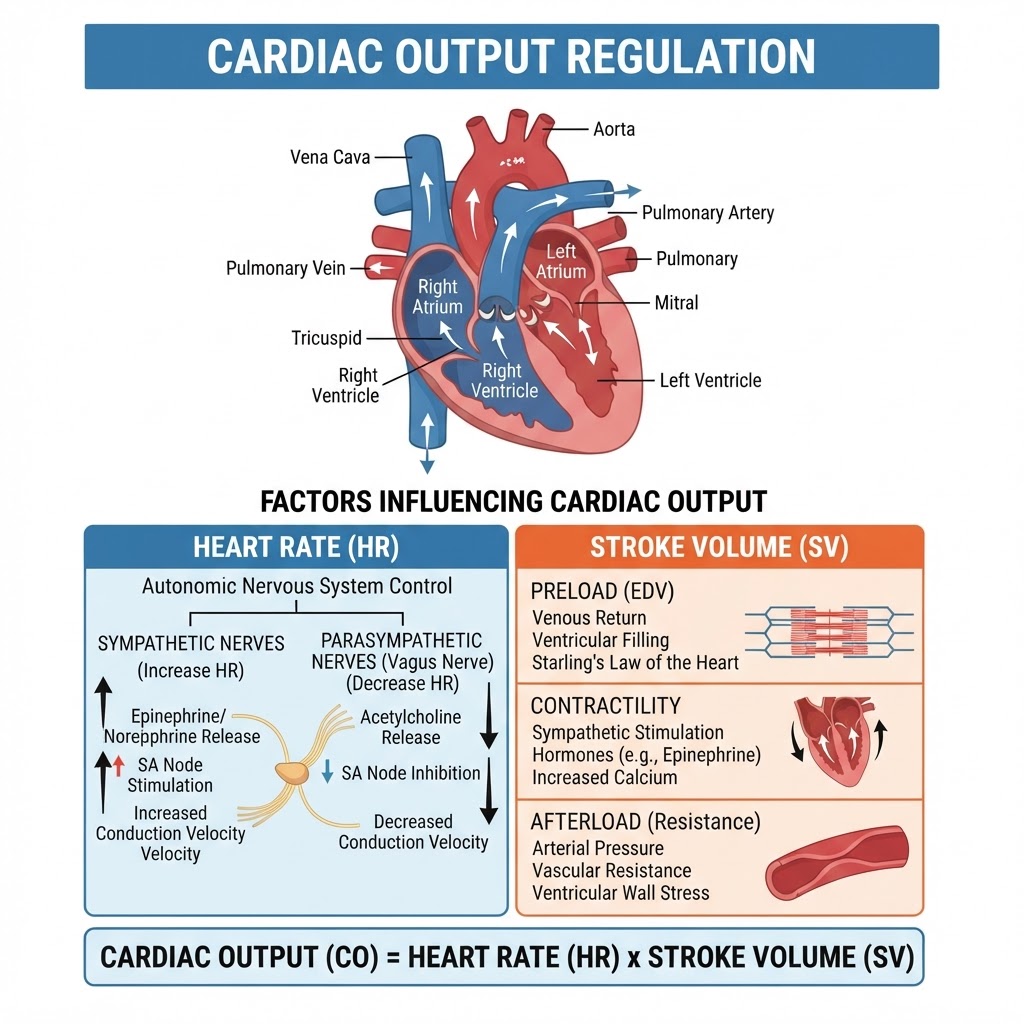
Cardiac output (CO) is the volume of blood pumped by the heart per minute, determined by the equation CO = Stroke Volume x Heart Rate.
Determinants of CO
- Preload: The degree of stretch of ventricular muscle fibers at the end of diastole.
- Afterload: The resistance the left ventricle must overcome to eject blood.
- Contractility: The intrinsic strength of the heart muscle contraction independent of preload.
- Heart Rate: The primary mechanism for adjusting CO in response to autonomic nervous system activity.
Clinical Assessment
- Monitor mean arterial pressure (MAP) to ensure adequate tissue perfusion.
- Assess capillary refill and skin temperature as indicators of peripheral perfusion.
- Evaluate mental status changes, which are often the first sign of decreased cerebral CO.
- Monitor urine output, as renal perfusion is highly sensitive to CO fluctuations.
Like what you see?
Subscribe to unlock all 360 Study Cards and 15,000+ flashcards, track your progress, and study anywhere.