Introduction to General Chemistry
Chemical Bonding
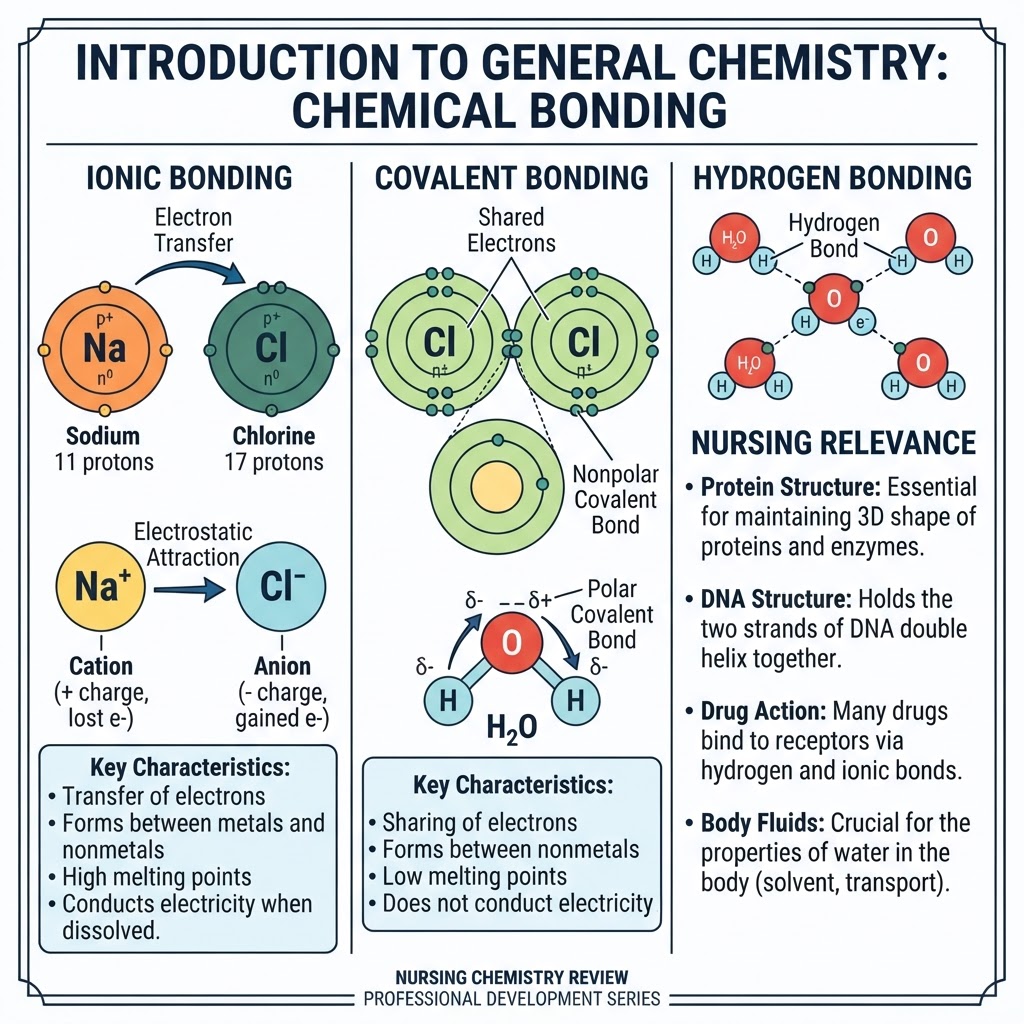
Chemical bonds hold atoms together to form molecules, which are the building blocks of pharmacology and biological structures.
Bond Types
- Ionic: Transfer of electrons, common in electrolyte salts (NaCl).
- Covalent: Sharing of electrons, essential for organic molecules.
- Hydrogen Bonds: Weak attractions, crucial for DNA structure and protein folding.
Clinical Impact
- Electrolyte Imbalance: Disruption of ionic bonds affecting cellular signaling.
- Drug Efficacy: Molecule shape determined by covalent bonding affects binding affinity.
- Protein Denaturation: Breaking hydrogen bonds leads to loss of enzyme function.
Like what you see?
Subscribe to unlock all 360 Study Cards and 15,000+ flashcards, track your progress, and study anywhere.