Introduction to Organic Chemistry
Nucleophilic Substitution Reactions
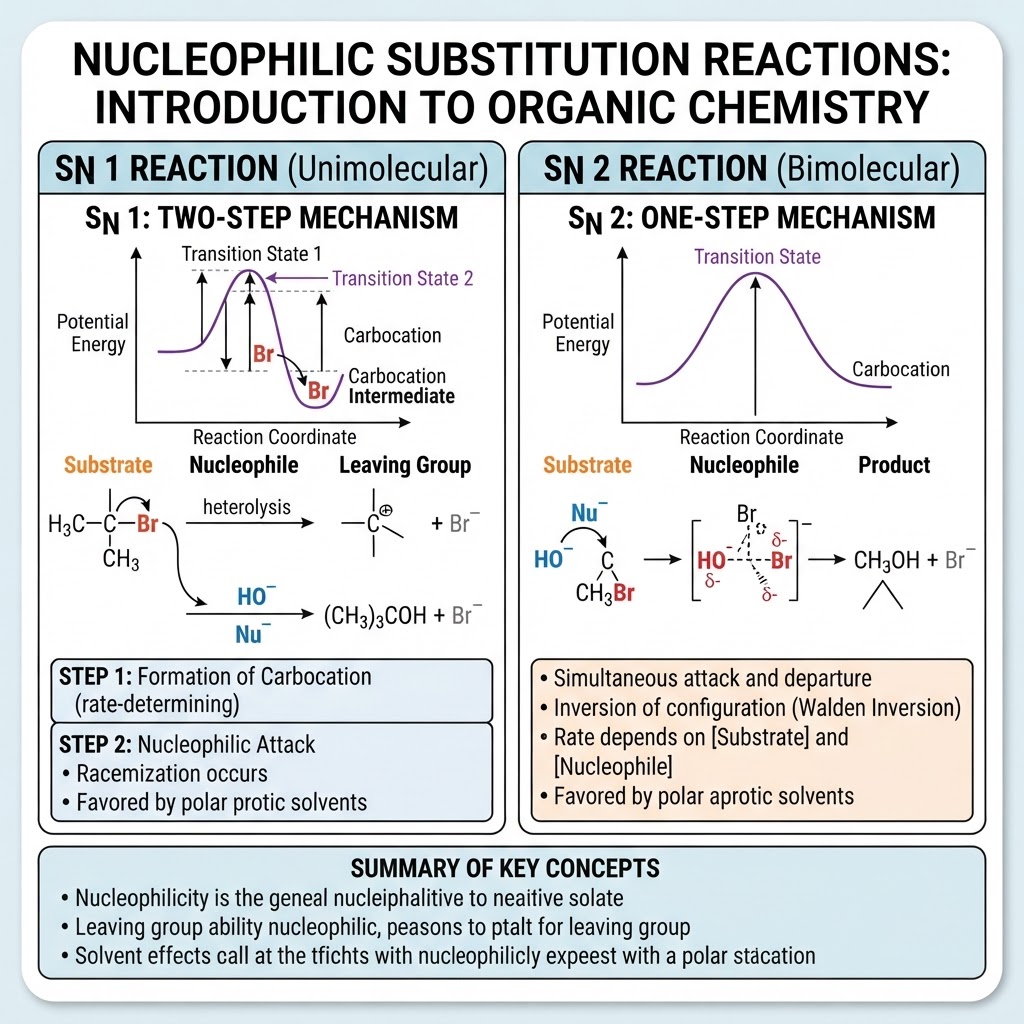
Substitution reactions involve the replacement of a functional group with another, foundational to organic synthesis and drug design.
Reaction Mechanisms
- SN1: Two-step mechanism via a carbocation intermediate.
- SN2: Concerted, one-step mechanism involving a back-side attack.
- Steric hindrance impacts the feasibility and rate of SN2 reactions.
Clinical Application
- Mechanism of action for many alkylating agents used in chemotherapy.
- Understanding these reactions helps explain drug degradation pathways and shelf-life stability.
Key Factors
- Nucleophile strength and solvent polarity significantly influence the reaction pathway.
Like what you see?
Subscribe to unlock all 360 Study Cards and 15,000+ flashcards, track your progress, and study anywhere.