Emergency Responses and Disaster Preparedness
Blast Injuries
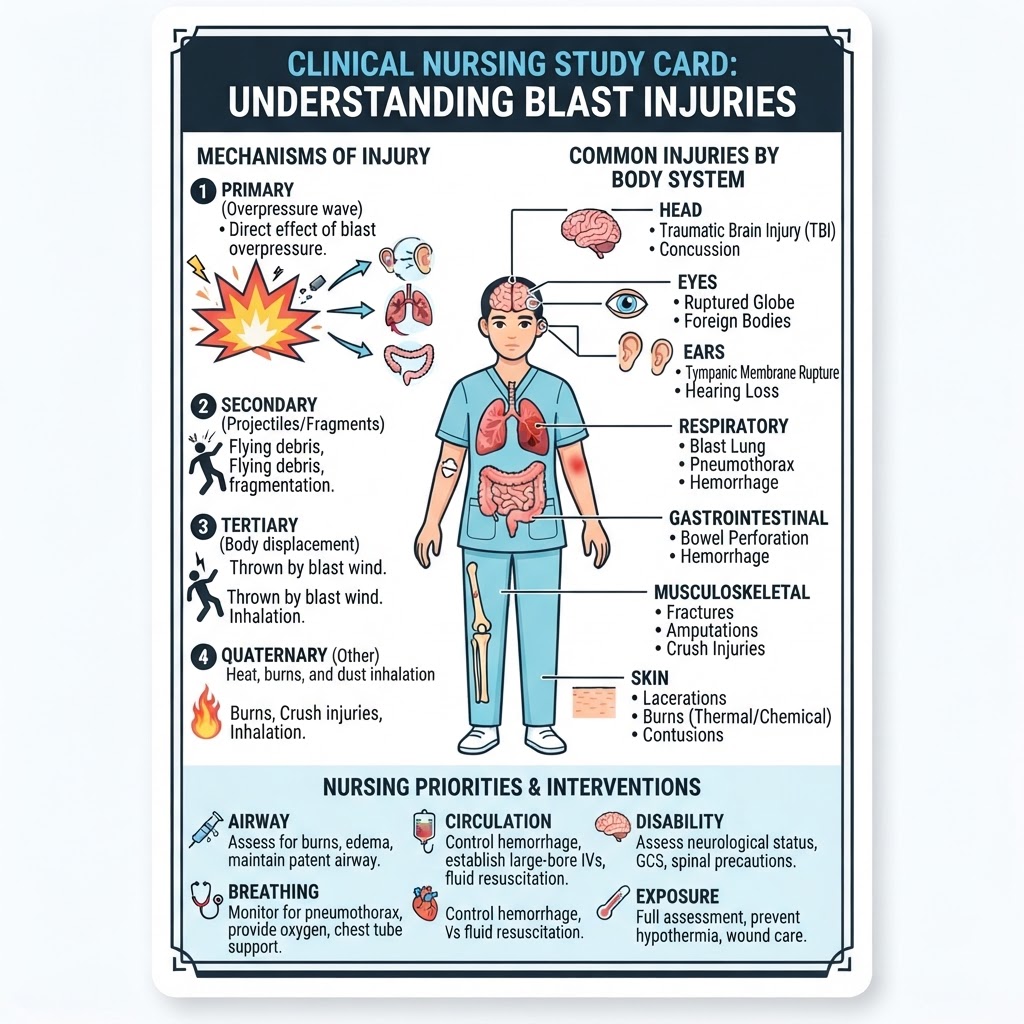
Blast injuries result from primary (pressure wave), secondary (projectiles), tertiary (displacement), and quaternary (burns/crush) mechanisms.
Assessment Priorities
- Primary blast injury: Focus on air-filled organs like lungs, middle ear, and GI tract.
- Secondary/Tertiary injuries: Look for penetrating trauma, fractures, and traumatic brain injury.
- Quaternary injuries: Treat for burns, crush syndrome, or inhalation of hazardous dusts.
Nursing Interventions
- Assess for blast lung: monitor for hemoptysis, dyspnea, and decreased breath sounds.
- Stabilize fractures and control hemorrhage.
- Administer fluids cautiously if crush injury is suspected to prevent renal damage.
Like what you see?
Subscribe to unlock all 360 Study Cards and 15,000+ flashcards, track your progress, and study anywhere.