Anatomy & Physiology
Action Potential of Cardiac Myocytes
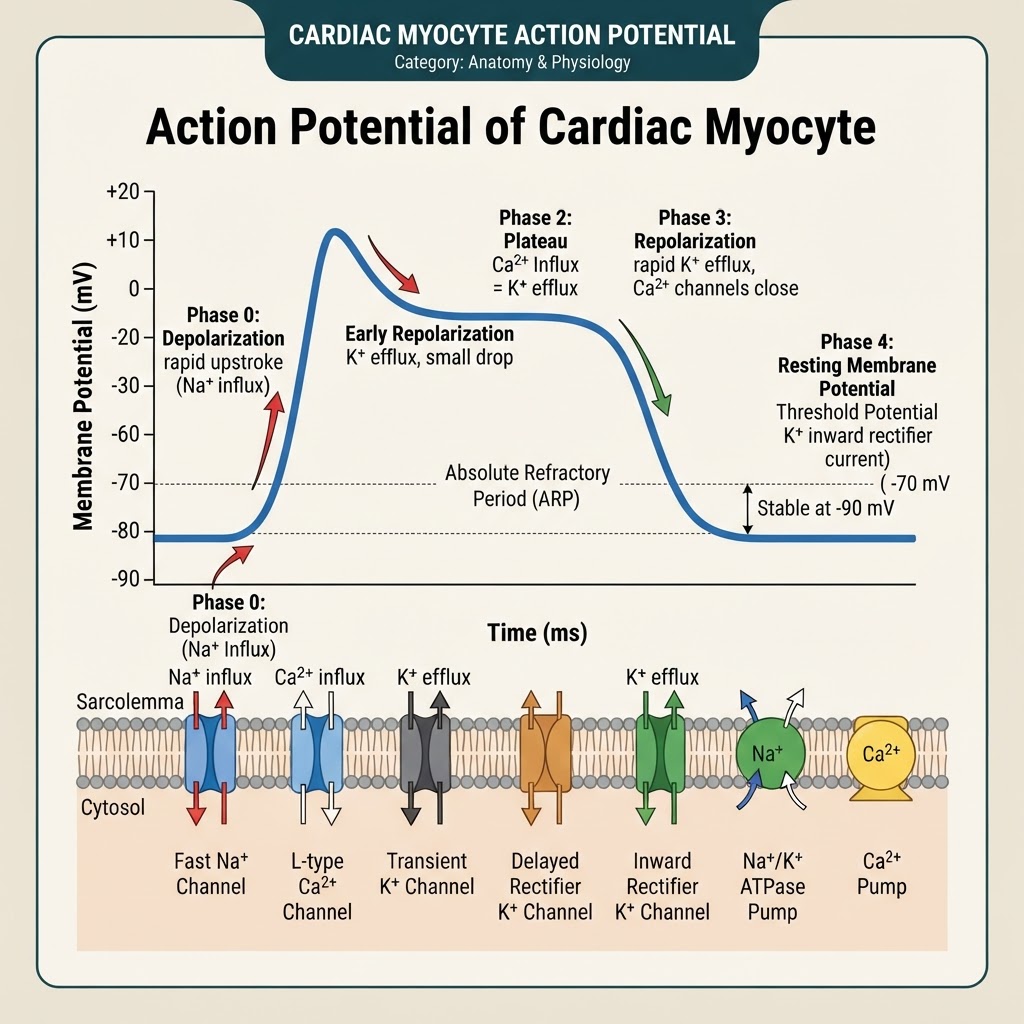
The cardiac action potential is a five-phase cycle representing the electrical depolarization and repolarization of ventricular myocytes, critical for rhythmic myocardial contraction.
Phases of Action Potential
- Phase 0: Rapid depolarization caused by influx of sodium (Na+) ions.
- Phase 1: Initial rapid repolarization due to efflux of potassium (K+) ions.
- Phase 2: Plateau phase where calcium (Ca2+) influx balances K+ efflux, sustaining contraction.
- Phase 3: Final rapid repolarization via massive K+ efflux.
- Phase 4: Resting membrane potential maintained by the Na+/K+ pump.
Clinical Significance
- Relative refractory period occurs during late phase 3, allowing for possible arrhythmias if triggered by strong stimuli.
- Antiarrhythmic drugs often target specific ion channels to extend the refractory period.
- ECG correlation: QRS complex corresponds to phase 0, while T-wave corresponds to phase 3.
Like what you see?
Subscribe to unlock all 360 Study Cards and 15,000+ flashcards, track your progress, and study anywhere.