Introduction to General Chemistry
Matter and Energy
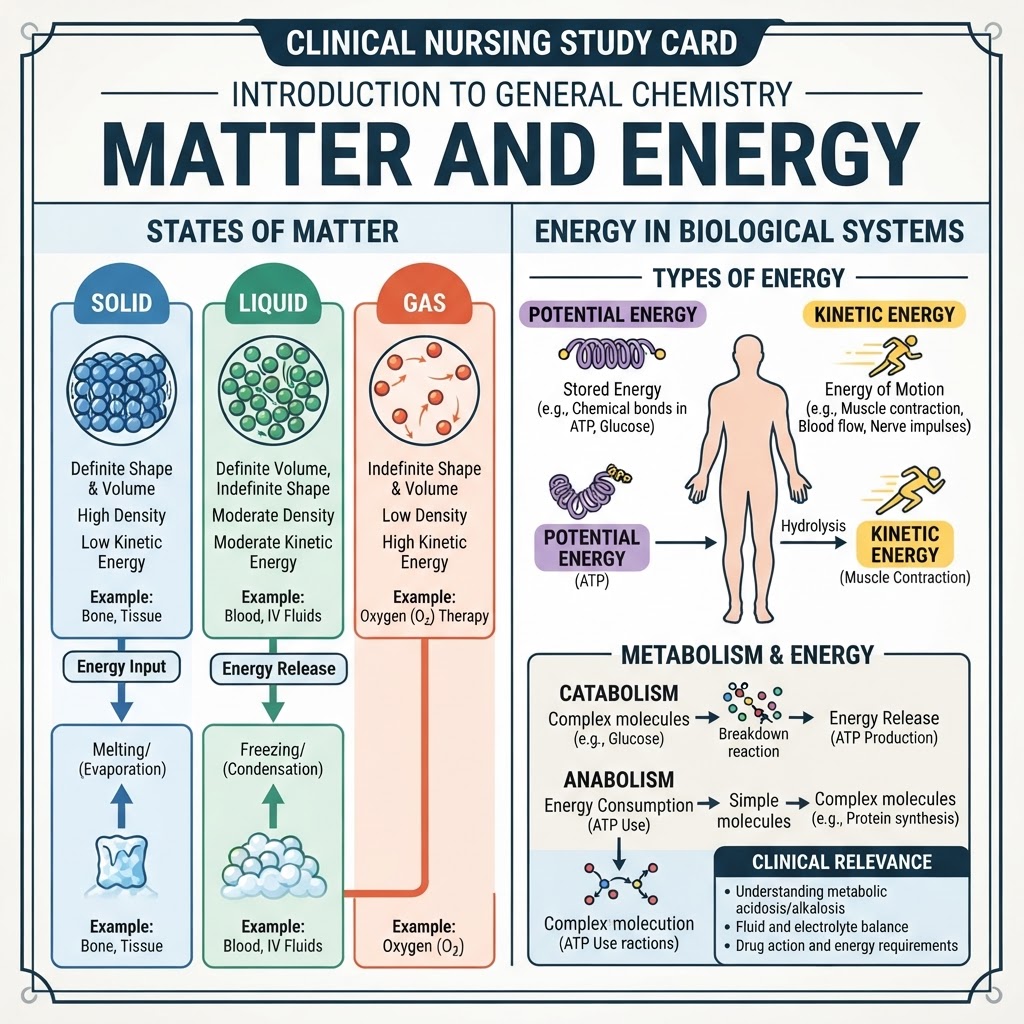
Understanding the physical states of matter and the transformation of energy is fundamental to grasping physiological homeostasis.
States of Matter
- Solids: Definite shape and volume, high intermolecular forces.
- Liquids: Definite volume, takes shape of container, moderate kinetic energy.
- Gases: No definite shape or volume, high kinetic energy, compressible.
Energy Types
- Potential Energy: Stored energy (e.g., chemical bonds in ATP).
- Kinetic Energy: Energy of motion (e.g., blood flow, ion transport).
- Exothermic Reactions: Release heat, common in metabolic breakdown.
Clinical Correlation
- Metabolism requires energy conversion from chemical to kinetic.
- Thermoregulation relies on exothermic reactions to maintain body temperature.
Like what you see?
Subscribe to unlock all 360 Study Cards and 15,000+ flashcards, track your progress, and study anywhere.